
Blasting Abrasives
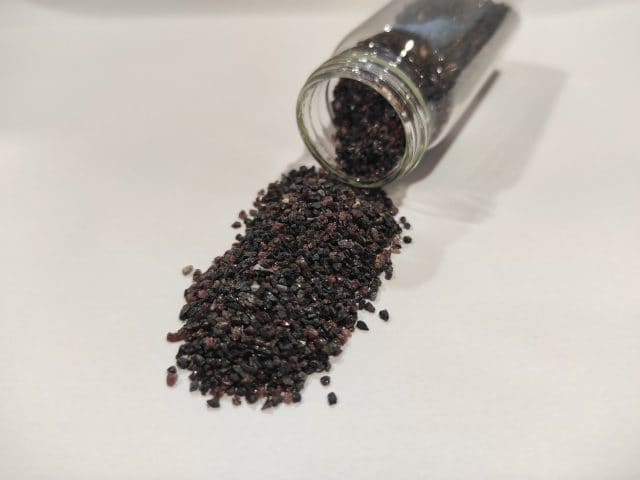
Black Sand - Non-recyclable
Used in outdoor blast pots
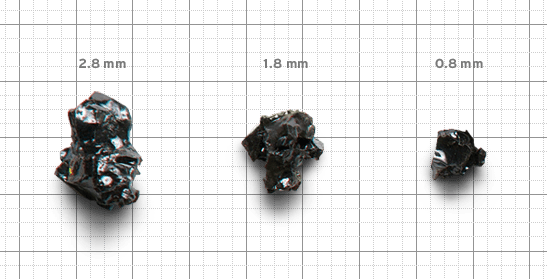
Available grain sizes
200–1500 μm
200–2800 μm
Characteristics of black sand
- It is an iron-bearing ore with traces of nickel.
- Its chemical composition contains 19% free silica, so great care is needed and the use of operator protective equipment is mandatory.
- With a hardness of > 6.5 Mohs, it has been the dominant abrasive used by blast operators for decades to clean all steel surfaces, because of its high cleaning speed.
- In theory it reaches SA 2½ around 10%–20% faster than olivine.
- It is classed as toxic waste and, by law, it must be collected and handed over to toxic waste management companies.
- Its dark colour leaves black residue around the site after the job — the area needs cleaning up afterwards.
- Because of its high iron content, the surface must be painted quickly so that it does not rust.
Used in
In an outdoor blast pot.
Properties
| Shape | Hardness | Specific gravity | Colour |
| Angular | 7.5 Mohs | 3.3–3.9 kg/dm³ | Black |
Chemical analysis
| Constituent | Chemical formula | Concentration [%] |
| Iron Oxide | Fe₂O₃ | 65.0–65.8 |
| Silica Oxide | SiO₂ | 18.6–19.2 |
| Aluminum Oxide | Al₂O₃ | 2.6–2.8 |
| Magnesium Oxide | MgO | 1.3–1.6 |
| Calcium Oxide | CaO | 5.7–6.6 |
| Chromium Oxide | Cr₂O₃ | 3.2–3.7 |
| Free silica | — | Traces |
| Copper Oxide | CuO | Traces |
| Zinc Oxide | ZnO | Traces |
| Sulphates | SO₄ | 0.3–0.4 |
| Chloride | Cl | < 0.1 |
| Nickel Oxide | NiO | 0.04–0.09 |
Packaging
- In 33 kg bags
- In 1 tn big bags
- In 2.15 tn big bags