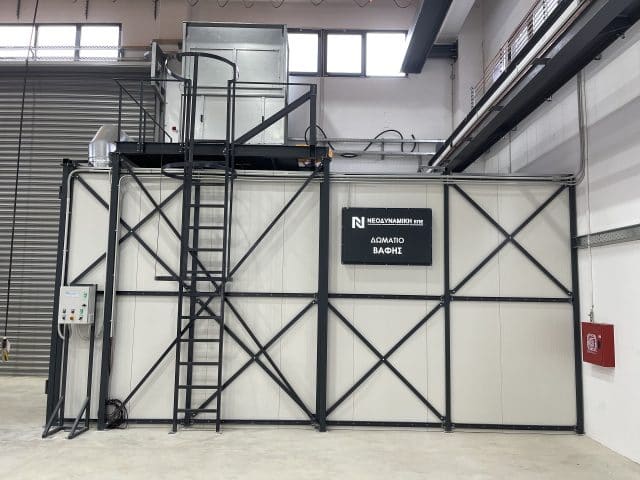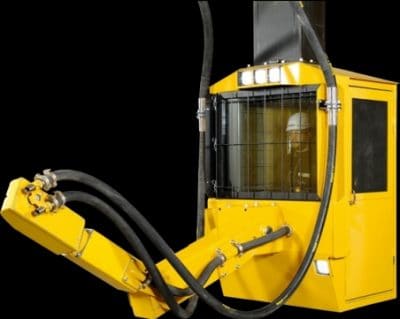

Glass Bead Blasting Rooms
Each project is studied and designed separately, according to the specifications we are given. We work to find the most suitable solution for your needs.
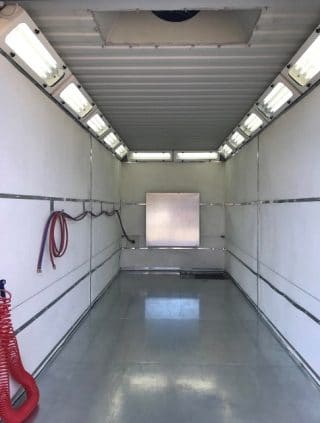
Glass bead blasting rooms are typically useful for finishing stainless steel surfaces.
Glass bead blasting leaves a milky appearance with a velvety texture on the stainless steel surface.
In many cases, converting a container into a glass bead blasting room is the more cost-effective solution.
Every customer's need is different. Each project is studied and designed separately, according to the specifications we are given. We work to find the most suitable solution for your needs.
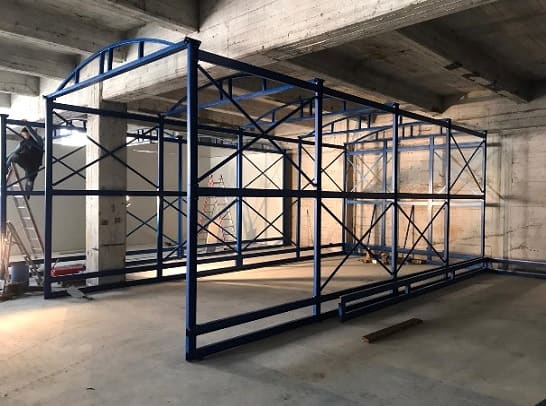
This covers the construction of a steel frame clad either in sheet steel or in polyurethane panels.
The room should be sized to cover most of your needs and no larger. Otherwise the cost of the air filtration equipment and of the chamber lining rises.
In many cases where the parts are not particularly bulky, our suggestion is a container, or two containers joined together.
It is the most economical solution and also the more flexible one in terms of permits. This construction is usually handled by the customer.
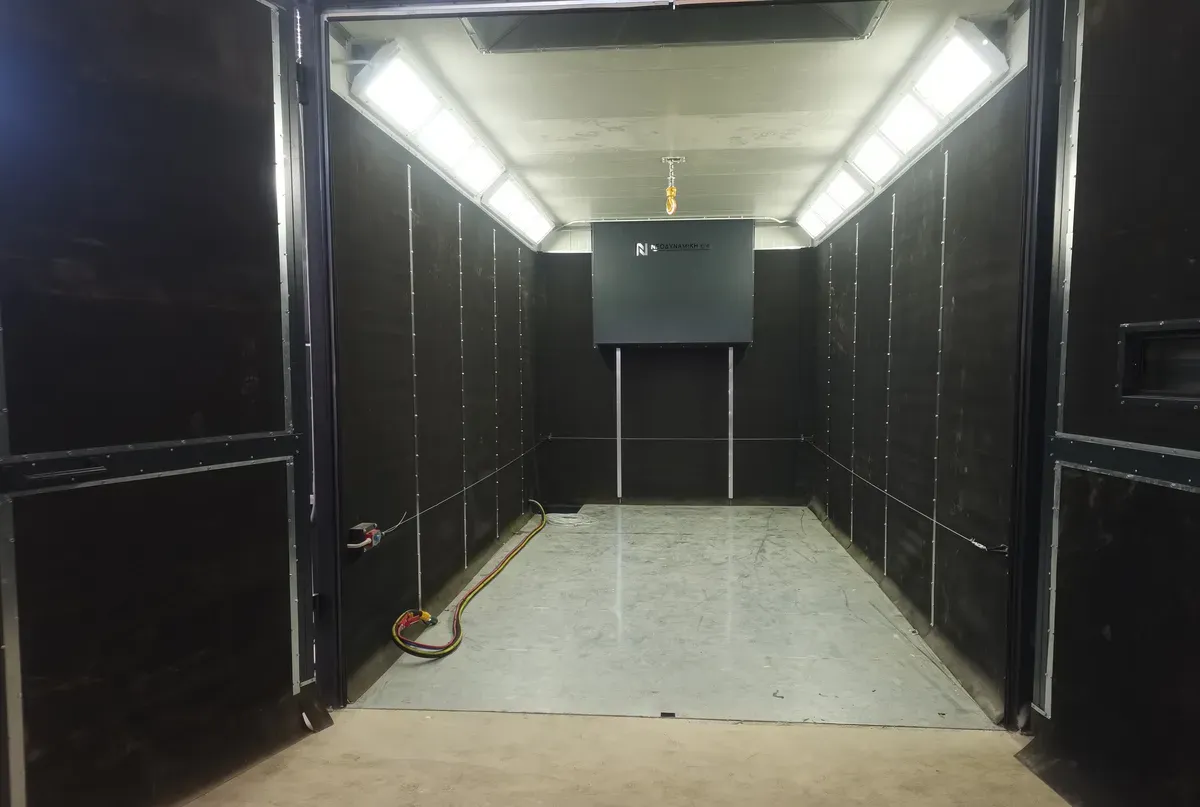
Around the chamber and the doors a white rubber blast-resistant sheet made from special rubber is fitted, to protect the walls from the impact of the glass beads.
Metal brackets must be fitted to hold the protective sheet in place.
CHAMBER LIGHTING
- For lighting the chamber we manufacture 1.00m sealed metal ceiling luminaires.
- They provide ample light and an easily replaceable triplex safety glass. The luminaires are sealed around their perimeter.
FLOOR LINING
- On the container floor we fit 3mm thick stainless steel sheet.
- Around the chamber we fit metal angles joining the floor to the blast-resistant sheet
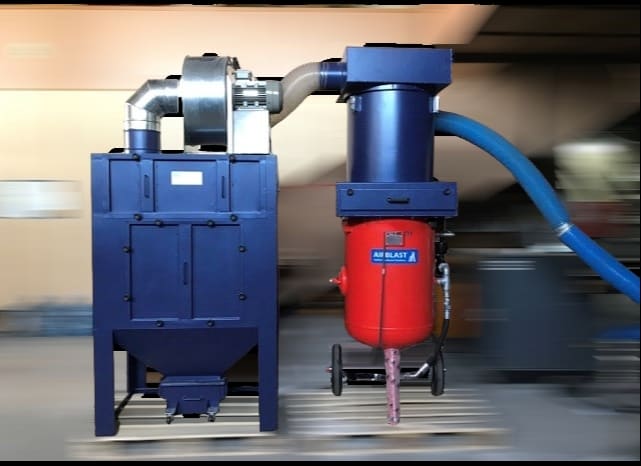
It consists of: a cyclone, a DCB-203 filter unit, pipework, air ducts, a control damper and a honeycomb floor section.
The honeycomb section is fitted at the end of the container.
The abrasive falls in metered quantities from this section and is carried to the cyclone.
The cyclone is mounted above the existing blast pot and, through the cyclone action, the good abrasive returns to the blast pot while the waste material (dust) ends up in the filter unit.
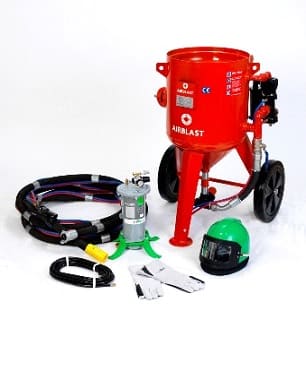
The blast pot is the heart of the system.
It is a wheeled pressure vessel (blast pot) with a capacity of 100 or 200lt, from which the abrasive is discharged.
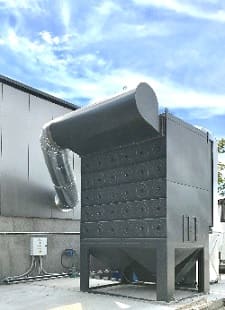
This is a filter unit that is essential for extracting and retaining the dust.
Fitted with a pneumatic mechanism for automatic, continuous cleaning of the filter cartridges.
The air released into the environment is clean, and dust emission into the environment is below 5mg/m3.
With this system we direct the already filtered air, free of moisture, back into the chamber, creating an airflow that helps us extract the dust more effectively.
It also saves us from building doors for air intake and from replacing their filters at regular intervals.
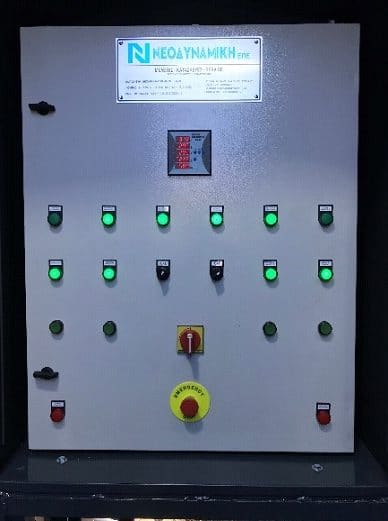
The machine is controlled from a single panel, which consists of:
⦁ Main ON-OFF switch
⦁ Multi-function A-V-Hz meter
⦁ Operating indicator lamps
⦁ Relays with thermal overload protection on the electric motors
⦁ PLC controlling the self-cleaning system of the filters
⦁ On/off switches for starting all the units and the lighting
⦁ Thermal fault indication for each electric motor separately
⦁ Metal trunking housing the entire cable installation
⦁ The components of the electrical panel will be made by well-known European manufacturers with ISO 9001 and 9002 quality assurance.
Glass beads
Our company operates the ISO 9001:2015 quality system. The machines our company manufactures comply with the European standards. On installation of the machines we also supply the following technical documents:
⦁ Operating instructions
⦁ Maintenance instructions
⦁ Electrical drawing
⦁ Mechanical drawing
⦁ ISO and CE certificates